Pelagomonas calceolata Andersen et Saunders
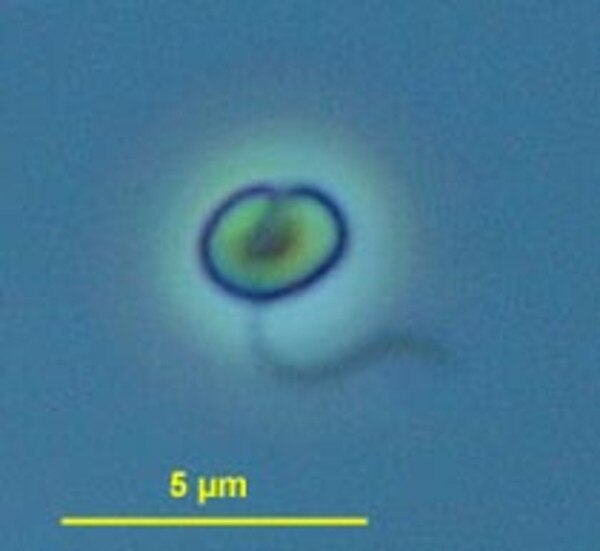
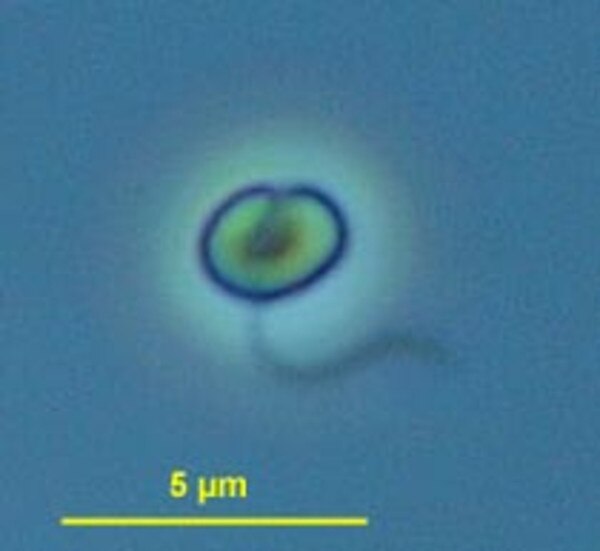
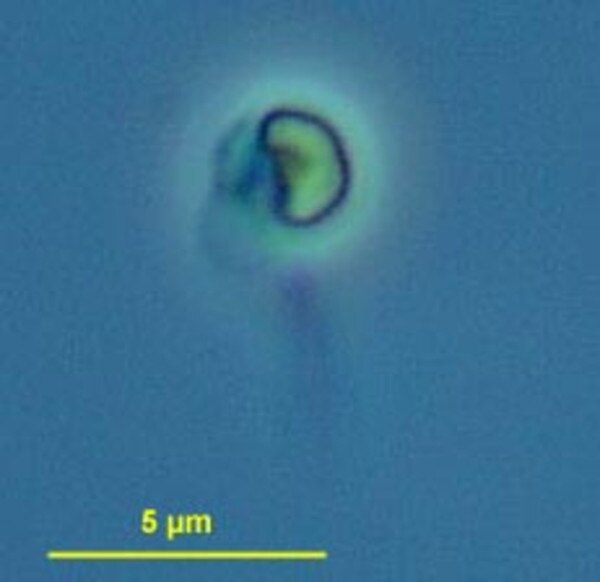
| Common Name | chromists | ||||
| Taxonomy by Gene Sequence | No | ||||
| Collection Site | 30.8333°N -136.8333°W North Pacific Central Gyre | ||||
| Ocean | Pacific | ||||
| Sea | |||||
| Nearest Continent | Open ocean | ||||
| Collected By | |||||
| Collection Date | |||||
| Isolated By | Lewin | ||||
| Isolated Date | 01/01/1973 | ||||
| Identified By | Andersen,RA | ||||
| Deposited By | Guillard,R | ||||
| Deposit Date | |||||
| Strain Synonyms | CCMP1214, MC1, Lewin#1082 | ||||
| Is The Strain Currently Axenic? | Yes | ||||
| When Was It Last Tested? | 06/03/2026 | ||||
| Other Information | Southtow expedition, RVThomas Washington | ||||
| Authentic Type/Strain | Yes | ||||
| Morphological Data | |||||
| Attributes | Algae, Marine, Warm Water | ||||
| Additional Resources | Genbank Genome Transcriptome AlgaeBase | ||||
| Genome Sequence Link | Yes | ||||
| Medium Used for Maintenance | L1 - Si |
| Other Reported Growth Media | f/2-Si, L1 - Si |
| Maintenance Temperature (°C) | 20 °C |
| Known Temperature Range (°C) | 20 - 26 °C |
| Cell Length (Min) | 2 |
| Cell Length (Max) | 4 |
| Cell Width (Min) | 1 |
| Cell Width (Max) | 3 |
The time required to regrow this culture, prior shipping, is approximately 40 days. If interested, please contact the CCMP for the cryopreservation methods (freezing and/or thawing protocols).
Note that aquaculture strains are always maintained as actively growing cultures, even if also cryogenically stored. Therefore, aquaculture strains (see aquaculture express ordering on the CCMP home page) can be shipped immediately upon request.
New daughter set created every three weeks
Daughter set……….…26umol quanta m-2 s-1
Mother set………….…20umol quanta m-2 s-1
Grandmother set….….10umol quanta m-2 s-1
Documentation:
Light backscattering properties of marine phytoplankton: relationships to cell size, chemical composition and taxonomy (https://academic.oup.com/plankt/article/26/2/191/1490132)
High variability in cellular stoichiometry of carbon, nitrogen, and phosphorus within classes of marine eukaryotic phytoplankton under sufficient nutrient concentrations (https://www.ncbi.nlm.nih.gov/pmc/articles/PMC5880891/)
Physiological responses of three species of marine pico-phytoplankton to ammonium, phosphate, iron and light limitation (https://www.sciencedirect.com/science/article/pii/S1385110104000802)
Genomes and gene expression across light and productivity gradients in eastern subtropical Pacific microbial communities (https://www.nature.com/articles/ismej2014198)