Isochrysis galbana Parke
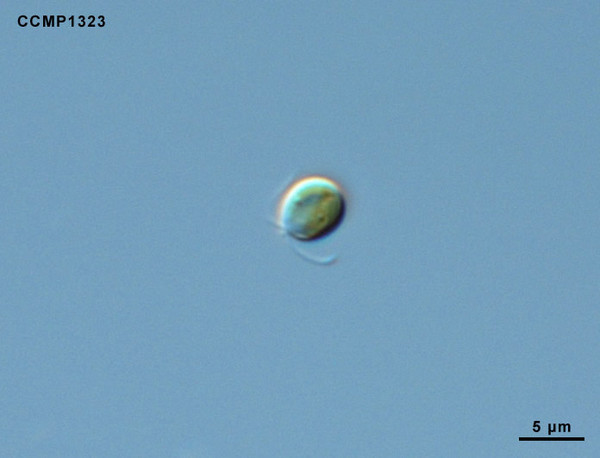
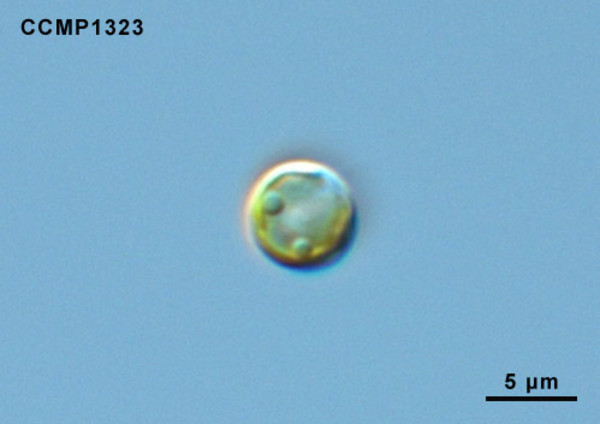
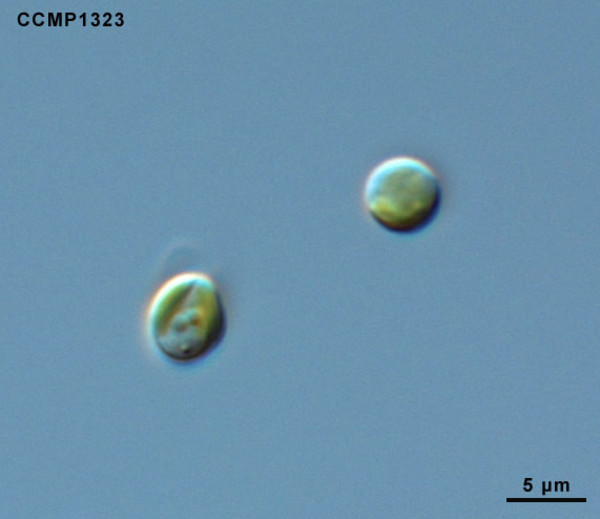
| Common Name | golden algae | ||||
| Taxonomy by Gene Sequence | No | ||||
| Collection Site | 54.085°N -4.77°W Marine Biological Station, Port Erin, Isle of Man | ||||
| Ocean | North Atlantic | ||||
| Sea | Irish Sea | ||||
| Nearest Continent | Europe | ||||
| Collected By | |||||
| Collection Date | |||||
| Isolated By | Parke,M | ||||
| Isolated Date | 01/01/1938 | ||||
| Identified By | Parke,M | ||||
| Deposited By | |||||
| Deposit Date | |||||
| Strain Synonyms | ISO;Plymouth I; UTEX 987; CCAP 927/1; NEPCC 2; NEPCC 633; SMBA 58; | ||||
| Is The Strain Currently Axenic? | Yes | ||||
| When Was It Last Tested? | 06/03/2026 | ||||
| Other Information | saltwater fish pond; EST sequence work done | ||||
| Authentic Type/Strain | Yes | ||||
| Morphological Data | |||||
| Attributes | Algae, Marine, Robust, High Lipid, Temperate, Aquaculture | ||||
| Additional Resources | Genbank Genome Transcriptome AlgaeBase | ||||
| Genome Sequence Link | Yes | ||||
| Medium Used for Maintenance | L1 - Si |
| Other Reported Growth Media | f/2-Si, L1 - Si |
| Maintenance Temperature (°C) | 14 °C |
| Known Temperature Range (°C) | 3 - 28 °C |
| Cell Length (Min) | 4 |
| Cell Length (Max) | 6 |
| Cell Width (Min) | 2 |
| Cell Width (Max) | 4 |
CCMP1323 was cryopreserved on Dec 14 1999 using 10% DMSO as a cryoprotectant.
The time required to regrow this culture, prior shipping, is approximately 21 days. If interested, please contact the CCMP for the cryopreservation methods (freezing and/or thawing protocols).
Note that aquaculture strains are always maintained as actively growing cultures, even if also cryogenically stored. Therefore, aquaculture strain starter cultures (2x15ml) and only starter cultures can be shipped within 24h of ordering (see aquaculture express ordering on the CCMP home page).
New daughter set created every four weeks at 10uL into 18mL
Daughter set……….…16umol quanta m-2 s-1
Mother set………….….10umol quanta m-2 s-1
Grandmother set….….4umol quanta m-2 s-1
Q+A:
Q: We are having some trouble with our cultures and were wondering if you would be able to provide any additional advice or information. Some questions that we have or have run across as we began to grow the algae are as follows:
* Have you used instant ocean to prepare your medium?
* What colors we should be seeing and should we be seeing any sedimentation?
- i.e. Is there a color change that would indicate the algae is unhealthy?
* Do you have any references or pointers as to what timescale and methods are best for splitting and scaling-up the cultures (e.g. what density should we grow to before we split and what splitting ratio works best with I. galbana).
* Should we grow these in vented flasks or tubes or should closed glass tubes work?
* For larger scale production, do you recommend bubbling air or 1% CO2?
A: 1. We do not use instant ocean. Instant ocean will precipitate when autoclaved which may make key nutrients unavailable.
2. CCMP1323 should be a nice light to golden brown when in a healthy culture. any other color such as green would indicate an unhealthy culture.
3. I like a 1 to 5 split for keeping a good growth rate and building biomass once a culture is healthy my co-worker prefers a 1 to 10 split. 1:1 is good if it is unhealthy. For this culture we put 1 drop into 18mls and it is grown in 3 weeks.
4. We use Kim caps on test tubes https://labgenome.com/73660-25-dwk-life-sciences-kimble-kim-kap-test-tube-caps-case-of-500/?gclid=EAIaIQobChMI7v2znd7b5wIViaztCh10ZgazEAQYASABEgLyyPD_BwE or silicone stoppers in a flask. Open or vented will allow bacteria in.
5. For volumes over 20L we sometimes use CO2.
6. I would not recommend agitation or shaking.
Documentation:
Light backscattering properties of marine phytoplankton: relationships to cell size, chemical composition and taxonomy (https://academic.oup.com/plankt/article/26/2/191/1490132)
On the description of Tisochrysis lutea gen. nov. sp. nov. and Isochrysis nuda sp. nov. in the Isochrysidales, and the transfer of Dicrateria to the Prymnesiales (Haptophyta). (https://link.springer.com/article/10.1007/s10811-013-0037-0)
Cultivation of the Marine Pelagic Tunicate Dolioletta gegenbauri (Uljanin 1884) for Experimental Studies (https://pubmed.ncbi.nlm.nih.gov/31449255/)
The metabolite dimethylsulfoxonium propionate extends the marine organosulfur cycle (https://www.nature.com/articles/s41586-018-0675-0)
Influence of algal iron content on the assimilation and fate of iron and carbon in a marine copepod (https://aslopubs.onlinelibrary.wiley.com/doi/abs/10.4319/lo.2014.59.1.0129)
Effects on larval crabs of exposure to algal toxin via ingestion of heterotrophic prey (https://link.springer.com/article/10.1007/s00227-010-1572-8)
Effect of acidification on preservation of DMSP in seawater and phytoplankton cultures: Evidence for rapid loss and cleavage of DMSP in samples containing Phaeocystis sp (https://www.sciencedirect.com/science/article/pii/S0304420310001386)
Long-term survival of haptophyte and prasinophyte resting stages in marine sediment (https://www.tandfonline.com/doi/full/10.1080/09670262.2016.1161243)
The decomposition of hydrogen peroxide by marine phytoplankton (https://www.sciencedirect.com/science/article/pii/S0399178402000063)
Comparative growth and survival of juvenile hard clams, Mercenaria mercenaria, fed commercially available diets (https://onlinelibrary.wiley.com/doi/abs/10.1002/zoo.20113)
Laboratory cultures of zebra (Dreissena polymorpha) and quagga (D. bugensis) mussel larvae using estuarine algae (https://www.sciencedirect.com/science/article/abs/pii/S0380133096709334)
Production and cellular localization of neutral long-chain lipids in the haptophyte algae Isochrysis galbana and Emiliania huxleyi (https://onlinelibrary.wiley.com/doi/abs/10.1111/j.1529-8817.2005.00128.x)
Interspecific differences in the bioconcentration of selenite by phytoplankton and their ecological implications (https://www.int-res.com/abstracts/meps/v213/p1-12/)
Characterization of different viruses infecting the marine harmful algal bloom species Phaeocystis globosa (https://www.sciencedirect.com/science/article/pii/S0042682205004095?via%3Dihub)
Characterization of sulfate assimilation in marine algae focusing on the enzyme 5'-Adenylylsulfate reductase (https://academic.oup.com/plphys/article/123/3/1087/6087620)